





Happy Days’ Development Director Kevin Higgs explains how nursery design balances safeguarding, learning and sustainability: from free-flow layouts and transport-first locations to BMS controls and “last-person-out” switches. The message: optimise buildings for outcomes, not just specs, and involve educators early to make better decisions, faster.
What’s the core theme of this episode?
Kevin’s north star is simple: children first. He reframes compliance as care—safety and safeguarding, not box-ticking and shows how nursery design decisions should serve teaching, staff wellbeing and energy performance together. As he puts it: “We’re not babysitting; we’re educating.”
“Safety’s got to be the priority… We’re looking after the most precious thing most people have.” — Kevin Higgs
Why does this matter for net zero and user outcomes?
If buildings are optimised only for capex or minimum standards, you miss the real goal: comfortable, resilient spaces that support learning. Nursery design must account for free-flow play (doors opening often), controllable heating/cooling, materials at child height, and staff-friendly operations.
4 practical takeaways
-
Free-flow is non-negotiable; design controls around it (door sensors + BMS that pause HVAC when open).
-
Prioritise the user’s eye-level: edges, sills and transitions matter in nursery design.
-
Engineer simple behaviour cues e.g., a single “last-person-out” switch that shuts non-essential loads.
-
Put nature in the curriculum path: move bug hotels, planters and veg beds to the children’s side.
How do you pick the right site before the first sketch?
Location sets the tone. In nursery design, Kevin starts with access for all modes. Walking, buses, and cycling, not just cars. Multi-modal access helps recruitment and operations, and it supports families who don’t drive. From there, plan rooms so managers can oversee activity and respond quickly.
How do you balance free-flow learning with energy control?
Outdoor–indoor movement is essential to early years. The nursery design response is layered: educate teams (“shut the door when you can”), add soft barriers (light refrigerator-style curtains), and use smart controls. Kevin is trialling BMS logic so heating/cooling pauses the moment doors open.
What small details make the biggest safety difference?
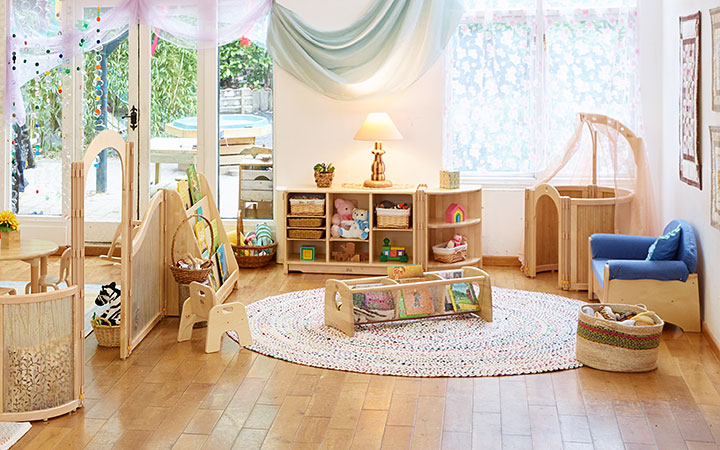
In nursery design, think at toddler height: blunt corners, protected sills, robust gate latches, and seamless floor transitions. Avoid façade features at head height (e.g., string courses that jut out). These “tiny” details prevent incidents and keep settings open and calm.
What ops features pay back every single day?
Two standouts: electric heat/cool systems (to avoid dual gas + AC) and a simple “last-person-out” master switch. In nursery design, those choices cut waste overnight, reduce bills, and give staff confidence that everything non-essential is off after closing.
How do you make sustainability visible (and teachable)?
Put biodiversity where children can see it. In nursery design, site bug hotels and planters on the play side; integrate veg beds and forest-school strips. That turns ESG from paperwork into practice and supports eco-schools curricula without “preaching.”
What do contractors and designers need to hear?
Listen early, iterate often, and size the team to the client. In nursery design, Kevin prizes partners who adapt the spec to educational reality e.g., finishing rough retaining walls safely, re-planning gardens for supervision lines, and aligning MEP with daily rhythms.
Where does Darren Evans Ltd fit?
From early feasibility to handover, we help clients align educational outcomes with performance targets so value survives “value engineering.” We stress-test briefs, model controls strategies and coordinate teams so nursery design choices deliver safety, comfort and lower carbon.
This is the kind of work we support at Darren Evans Ltd. If this resonates with your challenges, let’s talk.
What’s next for Happy Days?
A new-build near Hedge End (Boorley Park) is nearing completion, with fit-out focused on safe surfaces, forest-school provision and operable controls, another real-world testbed for outcome-led nursery design.
Let’s Build a Healthier Future Together
- 🎧 Listen to the full episode now
- 💬 Explore how Darren Evans can help your team thrive
- 📬 Sign up to our newsletter for more insights
- 🔗 Follow us on LinkedIn to stay connected
The opportunity is clear: when we design for children’s outcomes first, nursery design naturally becomes safer, smarter and more sustainable.

Solar modules now rival roof tiles on cost, batteries keep falling, and councils finally have clearer rules. The opportunity isn’t future, it's here. Emma Fletcher of Octopus Energy shows how communities can turn PV, heat pumps and smart tariffs into predictable costs, including zero bills for many homes.
Treat each settlement like an island. Build a cross-skilled local team, survey demand, stack grants, and partner early. With roof-friendly design and orchestration, households can secure comfort, resilience and often zero bills, not by owning more kit, but by adopting service models that flex with the grid.
Why does this matter for net zero?

Because affordability and health drive adoption. Rural oil, leaky stock and bill anxiety won’t be solved by one-off gadgets. Service-led propositions (e.g., zero bills) turn complexity into a simple promise: predictable costs, warmer homes, lower carbon now, not 2030.
What is zero bills and how does it work?
Emma describes a tariff that coordinates rooftop solar, a home battery and a heat pump against grid conditions so qualifying households see no electricity charge for a set period. In practice, zero bills bundles generation, storage and control; it fills the battery when power is green/cheap, serves the home, and exports value back.
Retrofit pilots show it can work in 170-year-old terraces and 1950s estates, with fair-use limits and EVs handled separately, proof that zero bills isn’t fantasy, it’s orchestration.
“If we treat every settlement like an island, the path becomes obvious.” - Emma Fletcher
What are the top takeaways for project teams?
-
Design the roof for energy, not just aesthetics, clean rectangles beat fussy hips for PV yield and install speed.
-
Organise locally: survey >50% interest, map grants, and bring a delivery partner via the council framework.
-
Treat finance and comfort as outcomes: predictable monthly costs, summer resilience, and healthier indoor conditions.
-
Don’t wait for “perfect tech.” Solar + battery are mature; heat pumps and heat networks are advancing; models like zero bills make benefits legible today.
How do communities get started quickly?
Week 1–2: Build a mixed-skill team (organiser, comms, technical lead, grants writer).
Week 3–4: Run a fast opt-in survey; hold a town-hall; document roof types/EPCs.
Week 5–8: Assemble funding (regional Net Zero Hubs, LA pots, ECO/utility routes).
Week 9–12: Compare options (fabric+HP, shared heat, PV+battery service); soft-market test partners; set decision thresholds.
Who benefits from zero bills?

New-build buyers get predictability from day one; housing associations can protect residents; landlords can share value with tenants via solar-and-battery services. For developers, moving from token PV to full-roof systems plus storage can lift EPCs, cut running costs and differentiate sales without extra capex when coupled with zero bills.
Because the agreement sits with the property, each buyer can subscribe or purchase the system later, so the benefits persist while choice remains—avoiding the “who owns the kit?” friction that often blocks zero bills–style propositions.
What are the risks or misconceptions?
The barrier isn’t technology; it’s ability - team, time, and a route through funding. Communities won’t be 100% aligned; that’s normal. Set fair-use expectations, coordinate M&E and legal early, and keep the story simple. Above all, remember that zero bills depends on good fabric, smart controls and straightforward roofs.
How does this align with Darren Evans Ltd’s approach?
From first conversation to handover, we align design intent, commercial model and performance proof so value survives “value engineering.” We scope solar-first roof strategies, heat pathways, and community propositions; we structure funding stacks and verify outcomes. This is the kind of work we support at Darren Evans Ltd. If this resonates with your challenges, let’s talk.
Let’s Build a Healthier Future Together
- 🎧 Listen to the full episode now
- 💬 Explore how Darren Evans can help your team thrive
- 📬 Sign up to our newsletter for more insights
- 🔗 Follow us on LinkedIn to stay connected
The window is open: design simple roofs, organise locally, and use service models to make low-carbon living predictable for budgets, health and the climate.
The UK construction industry is facing growing challenges related to sustainability, resource scarcity, and environmental impact. Astonishingly, the construction sector is responsible for a significant portion of waste, contributing a staggering 63% of all UK waste. As highlighted by Duncan Baker-Brown, architect and author of The Reuse Atlas, for every six houses built in the UK, one house worth of materials ends up in landfill or incineration. Around 14% of construction site waste consists of surplus materials that remain unused.

In an era of heightened awareness about climate change and resource depletion, the scale of waste in construction is not just environmentally unsustainable - it is economically irrational. Developers, driven by profit motives, often purchase materials only to discard them. This wasteful practice stems from traditional construction methods that prioritise labour efficiency over material conservation.
The Waste House: A Groundbreaking Example of Sustainable Building
One innovative solution to this issue is the Waste House at Brighton University, a pioneering project led by Duncan Baker-Brown. The building was constructed entirely from discarded materials, demonstrating that waste can be transformed into valuable resources. The project involved collaboration with Mears Group, Brighton Metropolitan Technical College, and architecture students, and featured materials ranging from construction debris to 25,000 toothbrushes collected from airline cabins within just four days.
The Waste House serves as both a sustainable building showcase and an educational tool. It challenges traditional linear economic models by showing how waste can be repurposed into functional, aesthetically pleasing buildings. For example, the building’s striking black exterior tiles are made from carpet tiles installed back-side out, offering a fire-safe and visually appealing alternative to traditional materials. This project not only highlights sustainable construction techniques but also educates future generations of builders and designers about the possibilities of material reuse.
Circular Economy in Construction: A Global Shift
The concept of a circular economy is gaining momentum, particularly in construction. A circular economy model focuses on reducing waste, reusing materials, and closing the loop on resource use. Countries like the Netherlands are leading the way, with a national circular economy plan spanning ten years. The Netherlands has set ambitious zero-waste targets for cities, and their approach involves mapping urban areas as “resource banks,” identifying how waste from one sector can be repurposed for another.
This systems-level thinking is transforming how buildings are conceived, constructed, and deconstructed. In the UK, similar efforts are taking shape. The UK Net Zero Carbon Building Standard provides data-driven guidelines for different building sectors, and the Department for Environment, Food, and Rural Affairs (DEFRA) is working on a circular economy plan set for release later this year. Additionally, the growing movement for "Part Z"—a proposed building regulation that would quantify and limit embodied carbon in construction—could drive the shift toward retrofit and reuse instead of demolition.
Financial Institutions and Cities Leading the Way in Material Reuse
Beyond governmental initiatives, the private sector is also embracing the circular economy. Major financial institutions, such as AMB AMRO in the Netherlands, now describe themselves not just as banks but as “material banks.” These institutions are recognising the value embedded in their property portfolios and are beginning to view buildings as material assets to be redistributed rather than demolished.
Similarly, cities like Rotterdam are creating resource maps that identify the material "DNA" of urban areas. These maps help planners understand what materials will become available as buildings are redeveloped, allowing these resources to be used in new construction projects. In London, structural engineers are conducting in-depth audits of commercial buildings, focusing on deconstruction rather than demolition to recover valuable materials, like steel frames.
The Economic and Environmental Benefits of Reusing Materials
The beauty of a circular economy approach to construction is that it’s not only environmentally responsible—it also delivers superior results. Second-hand materials, such as steel from older buildings, are often of higher quality than new materials, which may be contaminated during recycling. By repurposing these materials, the construction industry can not only reduce waste but also improve the durability and quality of new buildings.
Conclusion: A More Sustainable Future for the Construction Industry
The shift toward sustainable construction practices and the circular economy offers immense potential for reducing waste, lowering carbon emissions, and creating more resilient buildings. The Waste House at Brighton University stands as a powerful example of what’s possible when construction embraces waste reduction and material reuse. As circular economy practices gain traction in the UK and globally, the construction industry is on the verge of a transformative shift toward more sustainable, cost-effective, and environmentally responsible building methods.
By embracing circular economy principles, developers, architects, and construction professionals can reduce their environmental impact while creating high-quality, long-lasting structures. As we move toward a future where sustainability is at the forefront of construction, the role of the circular economy will only become more critical in shaping a greener, more efficient industry.
The Passivhaus movement is quietly transforming social housing across the UK, delivering remarkable benefits for residents and fostering a growing trend among local authorities. At FutureBuild, we had the privilege of speaking with a true pioneer who has championed Passivhaus standards for over 15 years, helping reshape affordable housing with a combination of innovation and maverick thinking.

What Is Passivhaus?
The journey towards Passivhaus standards began with a bold yet simple idea: create energy-efficient homes that would eradicate fuel poverty while offering exceptional comfort, especially for older residents. Rather than introducing a complex technical standard, the pioneer proposed "energy-efficient homes for elderly people", emphasising the practical outcomes rather than the methodology itself. This approach allowed the project to bypass bureaucratic resistance and resulted in the UK's first certified Passivhaus council homes.
How Passivhaus Improves Quality of Life
What makes this truly unique is the transformative living experience it provides. Residents immediately notice the difference: consistent warmth throughout the home, exceptional air quality, and remarkable quietness due to triple-glazed windows and heavily-sealed doors. These homes also incorporate building biology principles, using natural materials and colours to enhance overall wellbeing.
The results speak for themselves. Residents often refuse to leave, and post-occupancy monitoring conducted over 10-15 years consistently shows exceptional energy performance and comfort levels.
The Economics of Passivhaus: Affordable and Scalable
Initially, affordability was a significant barrier to the widespread adoption of Passivhaus standards. However, over time, experienced practitioners have demonstrated that certification can often be achieved with little to no additional cost compared to conventional building methods.
Key strategies for success include:
- Embedding Passivhaus standards in the client brief from day one
- Engaging experienced consultants and contractors
- Cultivating a collaborative, no-blame culture that prioritises quality and responsibility
This approach not only leads to certification but also transforms the construction culture, with contractors often becoming passionate advocates after experiencing the process firsthand.
UK’s Growing Commitment
The UK has reached a crucial milestone in the Passivhaus movement, with 1% of all new homes now being built to certified Passivhaus standards. This achievement represents significant growth, and the Passivhaus Trust has set an ambitious target of increasing this to 10% within the next five years. With many projects already in planning or under construction, this movement is setting the stage for the Future Homes Standard and proving that high-performance, healthy, and climate-resilient housing is both feasible and scalable.
Join the Movement
For those inspired to be part of the Passivhaus revolution, the Passivhaus Trust offers a wealth of resources and support. Their website, annual open days (typically held in October-November), and the willingness of experienced practitioners to share their knowledge create ample opportunities for newcomers to engage and contribute.
What began as a maverick approach to social housing has now evolved into a growing standard that delivers exceptional results for residents, while actively addressing the climate emergency. It proves that sometimes, the best way to create change is to focus on outcomes and let the results speak for themselves.
The construction industry is under increasing pressure to decarbonise, responsible for approximately 40% of global emissions. As a result, many companies in the sector are striving to meet ambitious sustainability targets, but this challenge has led to an increase in greenwashing. Businesses often struggle to balance meeting these targets while remaining competitive in the market. At FutureBuild, industry leaders explored the critical link between transparency, authentic communication, and the acceleration of sustainability goals.

The Importance of Transparency in Sustainability Communication
One of the most significant challenges faced by organisations in the construction sector is maintaining transparency in sustainability efforts. Many companies naturally highlight only their achievements while downplaying or concealing areas where they fall short. This creates a tension between marketing objectives and ethical communication. As discussed at FutureBuild, "Transparency is uncomfortable, transparency is vulnerable. Transparency is not about sharing only the very best but about sharing the difficult parts as well." Despite the fear of vulnerability, this openness could be the key to advancing both communication strategies and sustainability progress.
Embracing "Clumsiness" in Sustainability Efforts
A particularly resonant idea that emerged from the discussion was the concept of "clumsiness" in sustainability efforts. Rather than expecting perfection, companies should embrace the learning process, which may sometimes involve awkward or imperfect steps. Recognising that most organisations are genuinely trying their best - while still learning and making mistakes - fosters an environment of collective growth. Normalising this process helps companies feel more comfortable about sharing their challenges and encourages open dialogue instead of competitive posturing.
The Anti-Greenwash Charter: A Framework for Authentic Communication
To address these challenges, the Anti-Greenwash Charter offers a structured approach to transparent communication. The charter outlines three essential steps for organisations to build confidence in their sustainability messaging:
- Greenwash Awareness Training – This should be provided to all levels of the organisation, including C-suite executives.
- Content Review – A thorough review of all marketing materials against established frameworks, such as the UK Green Claims Code and the EU Green Claims Directive.
- Green Claims Policy – Developing a formal policy to govern ongoing communications related to sustainability.
This comprehensive approach ensures that organisations can confidently communicate their sustainability efforts while maintaining accountability through regular assessments.
The Commercial Advantage of Transparency in Sustainability
An interesting trend is emerging where companies that embrace transparency about their sustainability challenges are gaining a commercial edge. Many construction companies are now being recognised in tender submissions for their honest communication practices. This shift suggests that the market values transparency over polished but potentially misleading claims. As one participant noted, "The first movers, the ones that do this now, are the ones that will win this game." Embracing transparent communication not only serves ethical considerations but also creates a compelling business case.
Overcoming Greenwashing: The Path to Accelerating Sustainability
The discussion at FutureBuild also highlighted that greenwashing remains one of the biggest barriers to accelerating sustainability in the construction industry. When stakeholders can't fully trust the communications they receive, decision-making slows significantly. Imagine the possibilities if every sustainability commitment, statement, and product claim could be implicitly trusted. The collective improvement in decision-making speed could dramatically accelerate progress toward industry-wide sustainability goals.
Conclusion: Building Trust Through Transparency
As the construction industry works towards decarbonisation, embracing transparency in sustainability communications is essential. By moving away from greenwashing and being open about challenges, companies can foster trust, improve decision-making, and ultimately contribute to a more sustainable future for the industry.
Natural building materials are experiencing a powerful resurgence in the construction industry – and straw-based building systems are leading the way. As discussed in a recent episode of Thrive in Construction recorded live at FutureBuild, Eco-Cocoon is at the forefront of this movement, transforming the perception of sustainable construction with its compressed straw panels.

Healthier Homes with Natural Materials
Beyond their impressive environmental benefits, natural building materials offer profound advantages for human health and wellbeing. In the podcast episode, a representative from Eco-Cocoon shared powerful real-life stories of families suffering from mold exposure, asthma, and other respiratory issues caused by traditional building materials. In one remarkable case, a family finally found relief after building a home using natural materials – experiencing complete recovery in both physical and mental health.
These testimonials highlight a key benefit of straw construction: its “grounding” quality, which promotes a sense of calm and balance. Schools using straw materials report improved student focus, while care homes and hospitals are recognising the health benefits of bio-based construction materials.
Sensory Comfort in Straw-Based Buildings
Natural materials offer unique sensory advantages – from the pleasant earthy smell to excellent acoustic properties and thermal performance. Buildings made with straw panels are often described as more peaceful, quieter, and more enjoyable to live and work in. These qualities create spaces that feel naturally comfortable and healthier to inhabit.
Straw Construction is Strong, Safe, and Durable
Many people still associate straw buildings with fire risks and poor durability. However, modern straw construction has proven these assumptions wrong. Eco-Cocoon’s compressed straw panels undergo rigorous fire testing, the panels contain minimal oxygen – making them surprisingly fire-resistant.
In terms of longevity, some of Europe’s oldest straw buildings are over a century old and remain structurally sound. Inspections reveal that the straw inside is “still golden,” demonstrating the long-term durability of straw walls when properly constructed.
Prefabrication Meets Sustainability
The rise of prefabricated and modular construction aligns perfectly with the use of compressed straw panels. Eco-Cocoon manufactures pre-assembled wall sections that arrive on-site complete with windows, doors, and finishes – significantly reducing build time. A typical 3-4 bedroom house can be erected in just two days.
This efficient and scalable approach makes straw construction a compelling choice for developers seeking sustainable solutions that don’t compromise on speed or performance.
Straw Goes Big: Major Projects Across Europe
While straw construction was once limited to small residential builds, its use is now expanding into large-scale commercial projects. With plans to produce 1 million square metres of straw wall panels annually by 2034, Eco-Cocoon is scaling up to meet growing demand – though this would still represent under 1% of Europe's total annual wall construction.
Education is Key to a Greener Future
For the construction industry to fully embrace natural and sustainable building materials, education is essential. Scandinavian countries are leading the charge: Denmark, Finland, and Sweden now require formal training in bio-based materials as part of construction education.
By ensuring that builders and tradespeople are familiar with natural materials, the industry can overcome resistance and accelerate the adoption of healthier, more sustainable solutions.
Summary
The revival of straw construction and natural building materials is more than just a trend – it’s a shift toward healthier, more sustainable living environments. With innovators like Eco-Cocoon leading the way, the future of construction is not only greener but also deeply human-centred.
Watch the full episode here
The construction industry is at a pivotal moment as the UK pushes towards its ambitious net zero carbon emissions target by 2050. At the forefront of this transition is the urgent need to rethink building methods and materials. Among the most promising solutions is timber construction, a sustainable alternative that significantly reduces carbon emissions compared to traditional building practices.

The Carbon Challenge Facing UK Construction
The scale of the challenge is vast—construction activity contributes between 25% and 40% of the UK’s total carbon emissions. Without transforming how we build, reaching net zero is impossible. Materials like concrete and steel are major carbon emitters during production, prompting the UK government to back alternative approaches.
One such response is the Timber and Construction Roadmap Implementation Programme. This strategic initiative aims to increase the use of low-carbon materials like timber across the construction sector. Although paused briefly during the general election, the programme is now regaining momentum under the Labour government, which has expressed strong support for accelerating the transition. The goal? Delivering 1.5 million new homes while boosting sustainable construction practices.
Why Timber Construction is a Game-Changer
1. Lower Carbon Footprint
Timber is a renewable, carbon-storing material. Using it in place of concrete or steel can drastically cut emissions across the building lifecycle.
2. Cost and Time Efficiency
Contrary to common misconceptions, timber frame construction is not more expensive than traditional masonry. In fact, studies show:
- 1.1% reduction in construction costs
- 2.8% overall cost savings
- 19.5% faster build times
This speed is crucial for developers and housing associations aiming to house residents quickly and start generating income sooner.
3. Improved Thermal Performance
Timber frame buildings offer better thermal efficiency, leading to lower energy bills—a huge advantage in today’s high energy cost climate.
4. Increasing Industry Adoption
Major UK housebuilders are already embracing timber, acquiring or building offsite timber frame factories to bring this method in-house and streamline supply chains.
Addressing Timber Construction Concerns
Fire Safety
Fire safety has long been a concern, particularly for buildings over two storeys. However, with proper design and adherence to current building regulations, timber frame structures are safe. Regulations currently allow timber buildings up to four storeys (11m) without special conditions, and buildings between 11–18m can proceed with fire engineering assessments.
Notably, timber buildings of 10 storeys or more already exist in London and across Europe.
Supply Chain & Homegrown Timber
Most structural timber currently comes from Sweden, Scandinavia, Germany, and Austria, with Swedish timber dominating imports. While increasing homegrown timber supply in the UK is a long-term goal, industry experts are confident that supply will scale to meet rising demand.
A Cultural Shift in UK Construction
Timber construction isn’t just a technical or environmental shift—it’s a cultural one. Scotland builds around 90% of homes using timber frame, while England lags behind at just 10–12%. This disparity often stems from outdated ideas about the "ideal English home" being brick-built with a chimney, rather than practical or environmental considerations.
To successfully meet net zero goals, the industry must move beyond tradition. Collaboration across supply chains, early manufacturer involvement, and lean, waste-reducing processes will be vital.
Setting the Standard: Quality Assurance
Quality assurance remains key during this transition. Industry initiatives like STA Assure are setting the benchmark for safe, reliable timber construction in the UK, giving developers and residents confidence in this building method.
The Time for Action is Now
With strong government support, environmental urgency, and proven cost and efficiency benefits, the time to embrace timber construction is now. As industry leaders put it “The opportunity of a lifetime must be grasped in the lifetime of the opportunity.”
Watch the full episode here
Air quality is often overlooked, yet it has a profound and lasting impact on our health and wellbeing. Surprisingly, poor air quality is the single largest environmental health risk we face globally - but because it’s invisible, many people don’t give it a second thought.

The Hidden Dangers of Indoor Air Pollution
We breathe instinctively, unaware of what we’re drawing into our lungs. That’s a problem when you consider that the average person spends around 90% of their life indoors - roughly 70 years out of an 80 year lifespan - with over 55 years spent in their own home.
Why Air Quality Matters More Than You Think
Unlike food or water, we can’t opt out of breathing. You might skip a meal or choose filtered water, but there’s no escaping the air around you. This makes indoor air quality one of the most important environmental factors affecting our long - term health.
Airborne pollutants don’t just affect the lungs - they travel through the bloodstream and impact every organ and cell in the body. From respiratory diseases like asthma to cardiovascular conditions, cognitive decline, Alzheimer’s, cancer, and other chronic illnesses, poor air quality plays a major role.
The Cost of Poor Air Quality in the UK
The economic cost is just as alarming. In the UK alone, air pollution costs an estimated £20 billion annually, accounting for healthcare, lost productivity, absenteeism, and related expenses.
Despite this staggering figure, we've normalised exposure to pollutants through what's known as "tolerable risk" - accepting a level of danger simply because it's so widespread. Even where building regulations exist, most ventilation standards prioritise comfort - not health.
What’s Polluting the Air Inside Your Home?
Indoor air is a complex chemical soup. Many of the everyday products we use - like cleaning sprays, air fresheners, scented candles, and incense - release harmful substances. Ingredients such as limonene (used in citrus scents) and pinene (found in pine scents) can react with indoor ozone to form formaldehyde and particulate matter - both of which are known to harm human health.
Even common building materials - such as carpets, paints, plasterboard, and timber products - can off - gas volatile organic compounds (VOCs) into the air, creating a mix of pollutants that are difficult to predict or control.
75% of Buildings Fail to Meet Basic Ventilation Standards
Whether new or recently renovated, around three - quarters of buildings fail to meet even the minimum ventilation standards. This is often due to cost - cutting during construction, where systems are built to minimum legal requirements with no room for wear and tear or changes in usage over time.
Unlike other engineered systems that include buffers or redundancies, ventilation systems are often under - specified, leaving occupants exposed to poor indoor air quality on a daily basis.
The Solution: Awareness and Action
The good news? Air quality monitoring technology is improving rapidly, giving homeowners, schools, and businesses the ability to track real - time indoor pollution levels. This transparency is a powerful first step.
In the future, buildings will be assessed based on actual performance, not just compliance at the time of construction. This will push building owners, architects, and developers to take ventilation and indoor air quality seriously.
As individuals, our first line of defence is awareness. If you or your family experience recurring health issues - like fatigue, headaches, allergies, or respiratory problems - indoor air pollution could be a contributing factor.
What You Can Do Today
- Ask questions: Find out if your home, workplace, or children's school has adequate and properly maintained ventilation systems.
- Avoid harmful products: Minimise the use of scented sprays, synthetic candles, and harsh cleaning chemicals.
- Ventilate regularly: Open windows daily, especially when cooking or cleaning.
- Invest in air quality monitors or purifiers: These can help detect and reduce harmful pollutants.
Air quality may be invisible, but its impact is very real. From chronic illness to cognitive decline, the air we breathe is shaping our health every day. Don’t wait for symptoms to appear - prioritise clean air and demand better from the spaces where you live, work, and learn.
Watch the full podcast epsiode here
In the fast-evolving world of construction, leadership, sustainability, and diversity are at the forefront of creating impactful change. In this blog, Rebecca shares her personal journey in leadership, the challenges women face in construction, and how organisations can use diversity and sustainable practices to drive growth and innovation.

The Power of Networking and Continuous Learning
Rebecca’s journey into the podcast world was born from a desire to increase her network and deepen her understanding of leadership and sustainability in the construction industry. By diving into podcasts, Rebecca learned how essential it is to connect with other leaders, and how platforms like Riverside helped her gain momentum in sharing her message.
From Struggles to Triumph: A Leadership Journey
Rebecca's leadership career started in education, where she focused on inclusion and diversity. This passion followed her into the construction industry, where she saw a gap in female leadership. Rebecca discusses the personal challenges she faced, including an abusive marriage and postnatal depression, which pushed her to redefine what leadership should look like.
The key takeaway here is that adversity often fuels growth. Rebecca emphasises that leadership isn’t just about knowledge; it’s about vulnerability, empathy, and embracing diversity.
Sustainability: A Leadership Imperative
Rebecca stresses the importance of integrating sustainability with strong leadership. For organisations in construction, sustainability isn’t just about reducing carbon footprints or using greener materials. True sustainability involves creating an inclusive and supportive environment for all team members, empowering them to innovate and lead.
Challenges and Rewards of Female Leadership in Construction
As a female leader in a male-dominated industry, Rebecca explores how the industry's outdated mindset often limits progress. However, she believes that embracing empathy and flexible leadership can change the narrative. She challenges the norm by advocating for the inclusion of women in leadership roles, offering advice on how female leaders can support others who are returning from maternity leave or navigating challenges in the workplace.
Overcoming Mental Health Struggles in the Construction Industry
Mental health is a major issue in construction, with high suicide rates among men in the industry. Rebecca advocates for more open conversations and psychological safety in the workplace. She believes that including more diverse and inclusive leadership, can make a significant difference in tackling mental health crises in construction.
Creating a Culture of Empathy and Flexibility
In the workplace, leading by example is key. Rebecca highlights how flexible work arrangements, such as those that allow employees to manage family commitments, can create a more supportive work environment. By demonstrating these values as leaders, organisations can foster a culture of trust and productivity.
The Healed Method: A Blueprint for Organisational Change
Rebecca's unique approach to organisational development, known as the Healed Method, emphasises the importance of creating safe spaces for employees to share their experiences and challenges. It’s not about following a one-size-fits-all blueprint, but about recognising the diverse needs of employees and adjusting strategies to fit the organisation’s goals.
Conclusion
The connection between diversity, sustainability, and leadership in the construction industry is undeniable. By embracing these principles, organisations can drive not only innovation but also build a healthier, more inclusive environment for their employees. As Rebecca has shown, it isn’t about fitting a mold—it’s about understanding people, embracing change, and fostering collaboration.
As the world moves towards more sustainable living, technologies that reduce energy consumption are becoming essential in modern homes and buildings. One such technology making waves in the construction industry is wastewater heat recovery (WWHR). This innovative solution captures and recycles heat from wastewater, offering significant energy savings while reducing environmental impact. In this blog post, we will explore what wastewater heat recovery is, its benefits, and how it is shaping the future of energy-efficient buildings.

What is Wastewater Heat Recovery?
Wastewater heat recovery systems harness the heat energy from water that has already been used, such as shower water, which typically goes down the drain at around 35°C. By using a counterflow heat exchange system, these systems transfer heat from the wastewater to the incoming cold mains water. The result is that less energy is needed to heat the water for the next shower or bath, saving both energy and money.
How Does Wastewater Heat Recovery Work?
The process is relatively simple but highly effective. In a typical shower, water flows out at around 40°C, mixes with cold water, and goes down the drain. A wastewater heat recovery system captures this heat and transfers it to the incoming cold water through a copper heat exchanger. The mains water, which would typically be cold at 10°C, is warmed to around 28-30°C, which significantly reduces the energy required to heat it further to the desired temperature.
Energy and Cost Savings with Wastewater Heat Recovery
One of the most compelling reasons to adopt wastewater heat recovery in residential and commercial buildings is its ability to save energy and reduce utility bills. For an average family of four, installing a WWHR unit could save between £200 to £300 annually on hot water heating costs. In some cases, the system pays for itself in under two years, providing long-term savings.
Moreover, these systems are relatively low maintenance, with no regular servicing required. Homeowners can enjoy the benefits of reduced energy consumption without worrying about frequent upkeep.
Why Haven't More People Heard About Wastewater Heat Recovery?
Despite being in existence since the early 2000s, wastewater heat recovery is still relatively unknown to many people, even those in the construction industry. A key reason for this is regulatory changes. The introduction of Part L regulations in 2021, which focus on improving energy efficiency in new homes, has brought wastewater heat recovery into the spotlight. Builders and developers are increasingly recognizing the value of these systems for meeting energy performance standards while reducing long-term energy costs.
The Future of Building Design
The adoption of wastewater heat recovery technology is expected to increase significantly as sustainability becomes a top priority in construction. In the UK, the shift towards energy-efficient homes is driven by initiatives like the Future Homes Standard and the Net Zero 2050 target. By incorporating these systems into their designs, architects and developers can improve a building's EPC rating, reducing energy use and enhancing overall efficiency.
Additionally, WWHR can work seamlessly with other energy-efficient technologies such as heat pumps and solar panels, making homes not only more eco-friendly but also more affordable to run.
Barriers to Adoption and Overcoming Resistance
While wastewater heat recovery has proven benefits, there are some barriers to widespread adoption, particularly in commercial projects. Resistance often comes from developers, architects, or project managers who are unfamiliar with the technology or skeptical about its efficiency. However, once these professionals understand the savings potential and see real-life examples, such as demonstrations where they can feel the temperature difference in the pipes, their concerns tend to dissipate.
The Role of Education in Promoting Wastewater Heat Recovery
One of the main challenges is educating both industry professionals and the general public about its benefits. When installers, designers, and contractors are properly educated on how WWHR works, they are more likely to specify it in their projects.
Training and resources, such as product demonstrations and installation guides, can help increase adoption rates, ensuring that more homes and businesses benefit from this energy-saving technology.
Commercial Applications
Beyond residential homes, WWHR can be an excellent fit for large-scale commercial buildings, such as hotels, leisure centres, hospitals, and care homes. In facilities with high water usage, like showers and laundrettes, WWHR systems can drastically reduce energy consumption, providing significant cost savings. For instance, a 200-room hotel could save £80,000 to £90,000 annually on their hot water bills by installing these systems.
Incorporating WWHR in commercial settings not only supports green building initiatives but also improves the financial performance of these businesses by reducing operational costs.
Conclusion: The Future is Energy-Efficient
As the demand for energy-efficient homes and buildings continues to rise, technologies like wastewater heat recovery will play a crucial role in helping us achieve a sustainable future. With the ability to save energy, reduce costs, and improve building efficiency, this is a game-changer for both residential and commercial projects.
Whether you're a homeowner looking to reduce your energy bills or a developer striving to meet energy efficiency standards, waste water heat recovery is a smart, eco-friendly solution that provides tangible benefits.